

Hannah Rutter

Sets of cute collectables (Photo Credits: Google Images)
Does our love for Labubu originate from our innate desire for community, or our love of gambling? From Japan's fukubukuro tradition to a $700M phenomenon, blind box collectibles are far more fascinating (and manipulative) than they look. Hannah breaks down the history, the psychology, and the economics behind your favourite figurines.
Last year, small, furry monsters with bunny-like ears and a toothy grin took over the internet. Love them or hate them, Labubus generated almostUS$700 million in the first six months of 2025 for Chinese toy manufacturer PopMart, made it to Vogue Business’ Top 10 Words of the Year, and featured in tens of thousands of “unboxing” videos across TikTok, Instagram, and Youtube.
Labubus and similar collectible toys like Sonny Angels and Smiskis have since amassed considerable cultural reach, but you don’t even know what you’re buying when you buy it. These creatures are sold in “blind boxes”: identical, sealed, opaque packaging housing different collectibles from a series.
Blind boxes originated in Japan during the Meji period (1868 – 1912). Kimono merchants would sell fabric remnants at discounted rates at the end of the year, which was both an effective method of clearing old stock (maximising producer surplus!) and a budget-friendly option for families to purchase fabric. This method has since been adopted by Japanese department stores, and now the mystery goodie bags called fukubukuro are often worth more than their face value.
The famous gachapon were next in the 1960s: toy-centred versions of fukubukuro. At train stations, shopping centres, and streets in Japan, you can swap your hard-earned coins for a mystery capsule toy at machines akin to gumball machines.
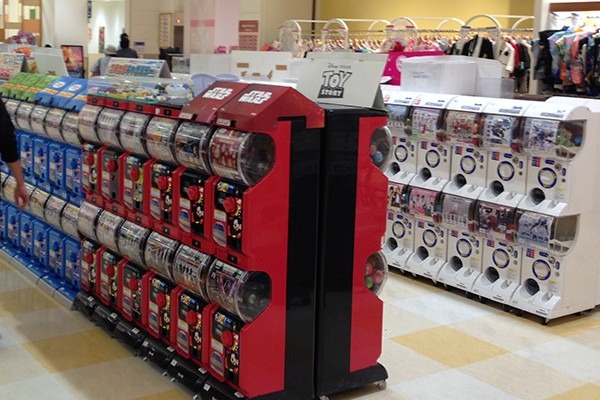
Not only are gacha now available in Queen Street Mall, but randomised mystery collectibles have been used as a marketing strategy closer to home for decades. Think Happy Meals, Woolworths’ Bricks, Kinder surprises, and cereal box prizes.
The success of smiski, sonny angels and the like is hard to pin down. Naturally, these companies exploit familiar marketing strategies like scarcity, uncertainty, and product endorsement, but the idea of collecting has been around for centuries. Is culture, psychology, or economics driving their success?
Collecting predates plastic. Andrew Dillon, Professor of Information & Culture at the University of Texas, even suggests collecting is evolutionary. Whether it’s a stolen jewel, smiski, or spare root vegetable, collections facilitate trade, store wealth, and act as an outlet for self-expression.
Way before Sonny Angels, humans discovered collecting more than necessary breaks the need to continually hunt and facilitates trade (cavemen, the original welfare maximisers). Archaeological evidence indicates individuals from the Middle Palaeolithic age kept personal collections of sentimental objects, and even nomadic people kept a surplus of storable or transferrable goods.
In addition to trade, collecting items has been a method for individuals to assert authority, store wealth and express themselves. War spoils and stolen jewels would be collected to demonstrate power and prove a leader’s authority. From the industrial revolution arose a new consumer class who pursued previously unavailable goods. The wealthier would purchase items reflective of their status, and the middle-class shopped for desirable products now at achievable price-points.
Could our desire for cheap plastic figurines be rooted in human psychology? If so, is it addiction or our desire to connect that drives our spending?
One argument is that collectors suffer an ‘unquenchable thirst’. Psychoanalytic theorists believe that collectors or hoarders have, in their formative years, ‘experienced unmet needs’. These needs have purportedly been ‘sublimated’ – a psychoanalytic term for channelling or controlling – into collecting and hoarding ‘for reassurance’.
The addiction argument is not well-supported empirically, argues Professor Dillion. In his 2023 study of around 3,000 respondents, only 14% of survey respondents felt collecting items was an addiction or compulsion.
Perhaps the better argument, elucidated by by Professor Dillion, is collecting as a social knowledge; as a basis for human desire to both understand the world and present to the world.
Having things can provide a basis for community or simply be a good conversation starter. Whether it’s Picasso paintings or Pokemon, sophisticated collecting requires accurate identification of the good. We also seek people with common interests; those also passionate about bulbasaurs or Pikachu. Therefore, those Facebook groups and Reddit forums discussing artist’s signatures or old car models are just digital iterations of our deep-rooted desire for human connection and shared knowledge.
However, it is unlikely Professor Dillion had Labubus, Sonny Angels, or Smiskis in mind. Collecting these does not require care and skill – in fact, they are deliberately designed to obstruct careful selection, you buy them blind!
Collecting blind boxes does have something to do with psychology, but unfortunately for all the wrong reasons. Companies use psychological techniques, analogous to gambling, to convince us to buy just one more box.
Melbourne researchers César Albarrán-Torres and Jessica Balanzategui call claw machines, blind boxes, and gacha ‘gamble-play media’. Gamble-play media includes experiences and products which ‘profit from risk-taking, and encourage intense, continuous playful consumption to ‘win’ a desired item’.
Albarran-Torres and Balanzategui found blind boxes trigger the same emotional states – anticipation, randomness, recurrent disappointment, fleeting happiness - as slot machines or pokies. They suggest there are preliminary indications that opening blind boxes or operating claw machines as a child can spur gambling problems in adulthood. Australia already has a well-known gambling problem, with almost one-third of Australian teenagers gambling at least once a year. Could blind boxes be a gateway to gambling?
PopMart and the like are familiar with their audience, and adept at weaponizing scarcity and second-hand gratification to drive consumption.
Xia et al’s empirical study into blind box consumption in China found your favourite figurines are deliberately designed to encourage abnormal consumer purchasing behaviour. In a study of 434 respondents, Xia et al found the perceived uncertainty in purchasing blind boxes exaggerates our cognitive biases relating to positive outcomes and reward cues. This leads us to ‘falsely believe [we] can control or identify the probability of obtaining’ our preferred figurine. The satisfaction derived from unboxing, paired with inaccurate judgement of its content spurs ‘irrational consumption behaviour’.
Irrational consumption behaviour is the antithesis to perfectly competitive markets. It occurs when consumer preferences are driven by emotion, rather than maximising utility and income constraints. Other examples of irrational consumption include impulse purchasing, panic buying, and herd behaviour. Xia et al found young people are more likely to engage in this behaviour, as they are more impulsive, curious, competitive, and risk-loving.
Why are blind boxes most popular with young people? Siyao Wu has two theories. First, by collaborating with well-known characters in media such as Miffy and Snoopy, producers spark nostalgia, letting the audiences emotionally resonate with the figurines. Second, the toys’ uniqueness – how many naked babies wearing fruit hats have you seen before – have allowed the toys to become a symbol for individuality. At least in China, Wu found young people are more likely than older generations to represent themselves through consumption.
Manufactured scarcity is another key driver of blind box popularity. Producing infrequent drops and limited editions keeps us purchasing smiskis in pursuit of that one version missing from our collection, according to Ms Renata Yannoulis, the advertising strategy director at agency TBWA Australia. It’s ‘manufactured’ because output is deliberately restricted; companies put a cap on the number of distributors from which you can purchase the figurine.
Going back to Xia et al’s study, scarcity strengthens our cognitive bias - think FOMO - and reinforces our delusions about limited resources. If we’re convinced that we’ll miss out, rationality goes out the window and we buy, buy, buy.
Thanks to influencers and unboxing videos, companies don’t have to do any advertising themselves. When Lisa from BLACKPINK posted a selfie with a Labubu, PopMart’s sales shot through the roof. Rihanna, Kim Kardashian, and David Beckham have all also been spotted touting the small furry collectibles.
However, it doesn’t take a celebrity to spark sales. The hundreds of thousands of unboxing videos across the web help generate hype around new products and collaborations, and further deepen FOMO. Consumers, predominantly women, fixate on the emotional experience and immediate reward of opening the box more so than the product itself. The short-form content acts as a ‘taster’ and we have the appetite.
Ultimately, there might actually be something sinister behind a labubu’s toothy smile. Use of gambling techniques, scarcity, and second-hand gratification leads us to overconsume what are, ultimately, small pieces of sculptured plastic destined for landfill. The toys itself, while perhaps hallmarks of individuality according to Wu, do not provide long-term satisfaction or joy. Most of the gratification comes from the unboxing experience, as opposed to retention or collection of the figurines.
Some countries are considering regulating blind box consumption over concerns they are vessels for gambling. Shanghai has introduced guidelines, including capped pricing, age limits, and limiting scarcity (seems like an oxymoron). Singapore legislators are considering similar regulations, but also propose mandating that manufacturers clearly disclose the odds of getting each product.
Collecting might indeed be evolutionary, tied to trade, be a method of self-expression and form a basis for community. However, when companies use manipulative sales techniques, are we picking out treasured items or are they being put in our hands?
Albarran-Torres, C., & Balanzategui, J. (2025). Gambling for children? Why Australia should consider regulating blind box toys like Labubu. The Conversation. https://theconversation.com/gambling-for-children-why-australia-should-consider-regulating-blind-box-toys-like-labubu-276163
Dillon, A. (2024). Why do people collect? The psychologist's view. Art Basel. https://www.artbasel.com/stories/survey-global-collectors-art-basel-professor-andrew-dillon-university-of-texas?lang=en
Li, X. (2025). The rise of blind boxes: Cultural, marketing, and consumer trends behind Bubble Mart's global success. Frontiers in Economics, Education and Engineering, 1(3). https://doi.org/10.61173/rj23pk87
Wakim, M. (2025, June 5). Why blind box collectibles are so popular with Gen Z. Australian Broadcasting Corporation. https://www.abc.net.au/news/2025-06-05/why-blind-box-collectibles-are-so-popular-with-gen-z/105379012
Wang, F., & Hancock, A. (2025). Adorable or just weird? How Labubu dolls conquered the world. BBC News. https://www.bbc.com/news/articles/cy4ydxlm9n9o
Wei, Z., & Yu, B. (2025). Why do you engage in blind box consumption? Exploring the group interactions and psychological motivations in blind box consumption. Current Psychology, 44, 15168–15182. https://doi.org/10.1007/s12144-025-08150-x